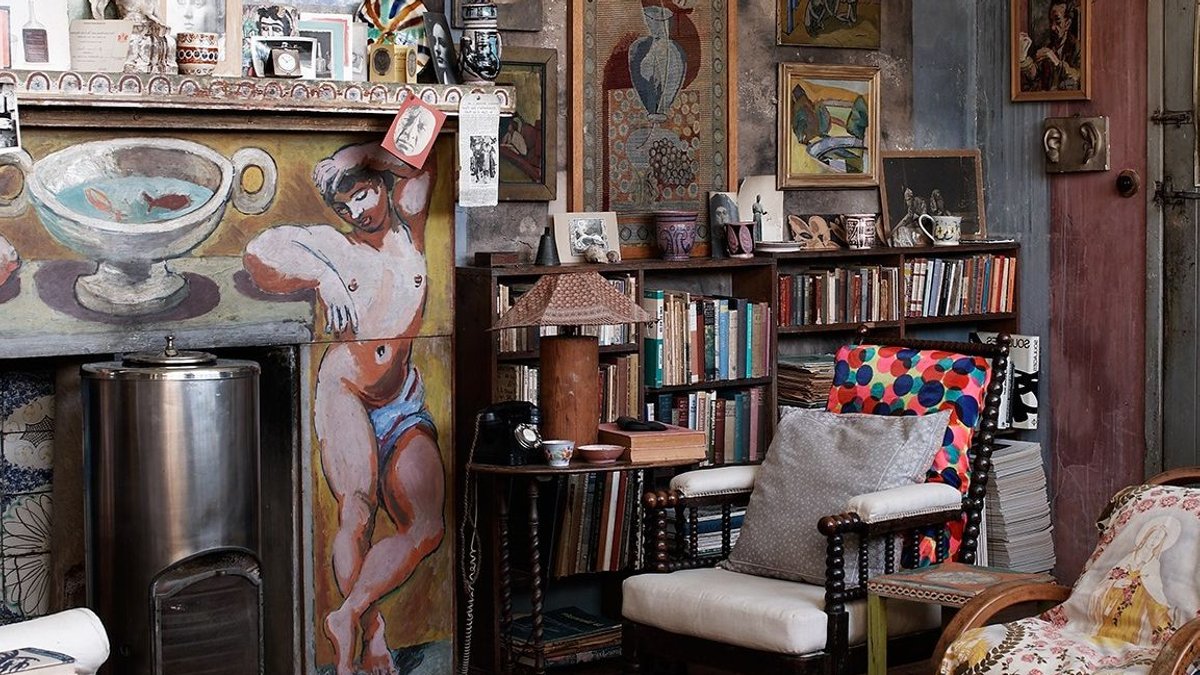
The Bloomsbury Group is known for its literary and artistic legacy, but its venture into interior design was a commercial disaster. The Omega Workshops, founded by Roger Fry in 1913, aimed to merge art and craft, but faced financial failure and artistic schisms.
Roger Fry and the Post-Impressionist Movement
Fry, a Cambridge-educated artist and critic, introduced Post-Impressionist art to Britain in 1910 with an exhibition featuring Cézanne, Gauguin, Matisse, Van Gogh, and Picasso. This show sparked controversy but also inspired a new generation of artists, including members of the Bloomsbury Group.
Fry’s vision extended beyond paintings. He believed in blurring the lines between fine art and applied art, a philosophy that led to the creation of the Omega Workshops. The enterprise was a collaborative effort, involving Vanessa Bell, Duncan Grant, and other artists from their circle, including English Cubists and the Camden Town Group.
The Omega Workshops: A Frenzy of Creativity
Located in Fitzroy Square, the workshops were a hive of activity. Artists designed furniture, textiles, and rugs, often adorned with fauvist hues and abstract patterns. The space contrasted sharply with the prevailing Victorian and Edwardian styles, offering a radical departure in interior design.
Opening in July 1913, the workshops received critical acclaim and attracted both bohemian society and forward-thinking establishment figures. However, this popularity soon led to internal conflicts. Wyndham Lewis, dissatisfied with the collective model, accused Fry of disorganization and the workshops of poor management. This sparked a public dispute that dominated London’s art circles for weeks.
Despite their creative output, the workshops struggled with practical challenges. Varnish melted, paint flaked, and administrative errors were common. Fry’s focus on aesthetic experimentation often overshadowed the need for quality craftsmanship. The business model, which relied on anonymity and utopian ideals, proved unsustainable.
The outbreak of World War I in 1914 further strained the workshops. Artists enlisted, clients left London, and the business faced a severe shortage of materials and labor. Fry kept the workshops afloat through his own financial contributions, but the enterprise never fully recovered.
Read Also: Advent Sunday marks traditional start for Christmas decorations
By 1919, the workshops held a clearance sale, and Fry was forced to sell his house. Despite its short-lived existence, the Omega Workshops left a lasting legacy in the world of interior design and art.
The workshops brought together some of the most significant artists of the time, including Nina Hamnett, David Bomberg, and Paul Nash. Their work, characterized by clashing colors and abstract forms, was revolutionary for England in the early 20th century.
Omega Workshops’ Artistic and Administrative Challenges
The Omega Workshops faced significant practical and administrative issues. Artists, often lacking guidance, struggled with technical aspects of their work. Varnish melted, and paint fell off, leading to client dissatisfaction. Financial constraints were evident, as Roger had to seek external funding. The administrative side was equally chaotic, with instances of incorrect deliveries and a lack of proper shopfront display, limiting their reach beyond a select circle.
Despite these challenges, the workshops had notable achievements. Omega-designed dresses gained popularity within their social circle, and Roger’s pottery became increasingly successful. The ‘Omega Art Circle’ was established, and they produced a ballet with Omega-made marionettes. Prominent figures like W.B. Yeats and Lalla Vandervelde commissioned their work, showcasing the workshops’ appeal to high-profile clients.
However, external factors took a toll. The impact of World War I, the Spanish flu epidemic, and material shortages affected operations. The loss of artists and friends, conscription, and the post-war economic climate further hindered their progress. These circumstances, combined with internal struggles, contributed to the workshops’ eventual decline, despite their artistic innovations and influence on British design.
A Legacy of Creativity
While the Omega Workshops were a commercial failure, their artistic legacy endures. Their experimental spirit and rejection of traditional boundaries ushered in a new era of design, continuing to inspire and influence artists and designers today. The Tate exhibition highlights the workshops’ stunning paintings and innovative designs, ensuring their story remains alive for generations. A surviving wardrobe from the workshops, adorned with bold floral motifs and sponged faux marble, serves as a tangible reminder of their radical vision and lasting impact.