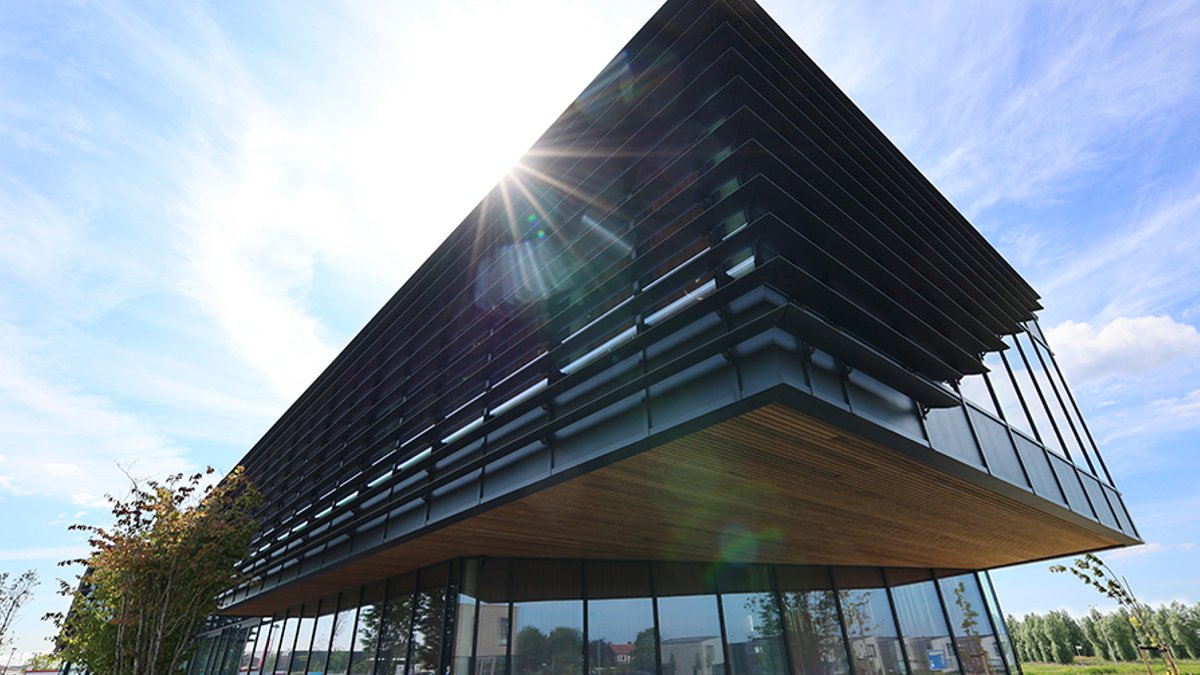
A software firm has constructed its own headquarters after facing difficulties securing office rentals in a constrained market. Maxxton, along with its subsidiary Koole Controls, has relocated into a new 2,000-square-meter facility on Middelburg’s outskirts. The building was engineered to maximize natural light and interior comfort while addressing the shortage of large available office spaces.
The design incorporates extensive glass facades and ICA-300 Icarus blades—horizontal shading elements that adjust sunlight exposure without obstructing views. This approach differs from conventional solutions like blinds or screens, as it permits winter sunlight while blocking summer heat, meeting local regulations on overheating risks. The structure’s boomerang shape includes an inner garden and terrace, framing vistas of both the surrounding meadows and the Middelburg cityscape. Architect Michaël Strenk highlighted the site’s advantages, stating the layout strengthens the indoor-outdoor connection. “The heart of the boomerang faces the Middelburg skyline,” he said.
Maxxton’s chief technology officer, Rob Sonke, justified the use of blades over enclosed shading methods. He explained that a design with lots of glass was the logical consequence, but in terms of incidental sunlight, this is not always a great idea. They went to see a few other projects, many of which use screens, blinds, or other closed solutions. However, they wanted to avoid that type of solution, otherwise you might as well build a closed facade. That’s how they came up with the idea of working with blades. The team used 3D modeling to calculate blade dimensions and spacing, ensuring effective sunlight management while preserving visibility.
Read Also: UK Builders Cut Carbon with Smarter Bathroom Choices
The facade contractor, Storax, encountered technical hurdles, particularly in securing the blades to the glass panels. Given the waterfront location, wind loads posed risks, especially in corners where mounting space was restricted. Engineers devised a solution using threaded studs and tapped holes to anchor the blades beyond standard attachment points, achieving a smooth and durable installation.
For companies like Maxxton, where large rental spaces are limited, constructing bespoke facilities allows greater control over layout, materials, and energy efficiency. The blades, for example, serve dual roles: they moderate indoor temperatures and enhance the building’s aesthetic, a key consideration for an international IT firm seeking to create a lasting impression.
Initial feedback from staff and visitors has been favorable. “The very low sun in the morning or in the winter months sometimes still creates a few tricky situations but blades would never have offered a solution in this context. We are still looking for an appropriate solution. We must first find our feet in our new building while enjoying the curious birds that come to watch us all working diligently from the blades.”