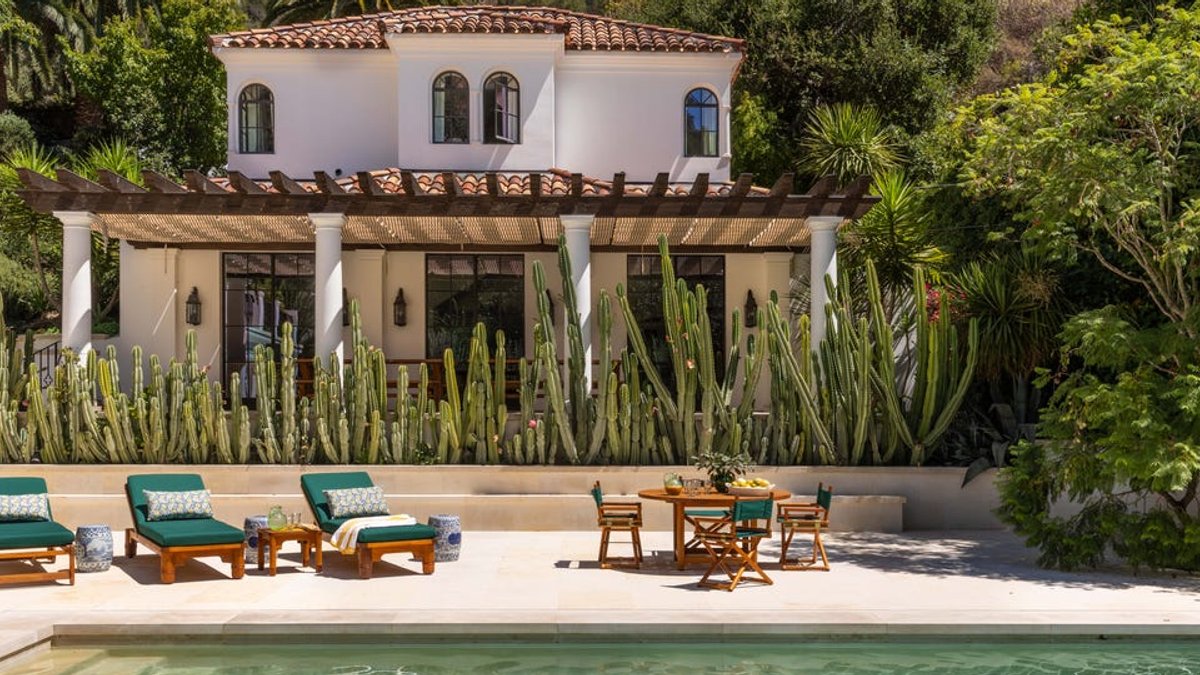
The Beverly Park, California, home where Lili Fini Zanuck resides today was not constructed for two people. It was built for one—and designed to bring her happiness.
Zanuck, a Hollywood producer and director, faced the loss of her husband, Richard Zanuck, in 2012. Their shared residence, a Georgian-style manor in Beverly Hills, sold shortly after his passing. Within months, she acquired a new property in Beverly Park. This time, she would oversee its design entirely on her own.
She had undertaken a similar project earlier in her life. During her twenties, she built a ski house in Sun Valley, Idaho, for her first husband and his sons. This became her first significant architectural endeavor. Instead of following the dominant East Coast-style homes in the area, she drew inspiration from Frank Lloyd Wright. The outcome was a space that felt purposeful rather than borrowed.
Adopting Lutyens’ Palladian Proportions
The Beverly Park house incorporated elements from another architectural tradition: the work of early 20th-century English designer Edwin Lutyens. Zanuck had long admired Palladian proportions—balanced ratios that created spaces feeling both grand and intimate. The home she and Richard had built there embodied those principles. He adored it, and she sold it quickly after his death.
For her new residence, she turned to Spanish-style architecture, a natural match for California’s climate and cultural heritage. However, traditional Spanish homes, with their small windows and deep overhangs, would have created overly dark interiors. Instead, she merged influences: Portuguese tiles, colonial Argentine details, and an abundance of natural light to keep the spaces lively.
The architect, Harrison Design, began work immediately after being hired. Zanuck had already spent months gathering inspiration, photos, sketches, and even tiles she commissioned in Sintra, Portugal. She returned to the region twice more, drawn by its skilled craftsmanship. By the time construction permits were approved, she had already secured most of the materials needed.
Curating Essentials, Rejecting Designer Aid
She brought very few personal items from her previous homes. Sentimental attachments could disrupt the intended flow of a space, she believed. Only essential pieces remained, such as the long dining table and the living room sofa, selected for their proportions and comfort. No interior designer was involved; Zanuck made every decision herself.
Books occupy a central role in her life, and her new home reflects that. The Beverly Park house already featured a double-height library, a space she deeply valued. This time, she expanded it with a domed ceiling, allowing natural light to flood the room. It serves as her gathering place for friends and her quiet retreat for reading.
A Library Sanctuary and Grand Sofa
The grandchildren also have their own designated area. In previous rental homes, they had sprawled across oversized couches. Now, a Restoration Hardware sofa sits in the living room, large enough to accommodate playtime, television, and family gatherings.
None of these choices were preplanned after Richard’s death. Their life together had been rich with shared experiences. Yet, a decade and a half later, she has discovered something new: a home that truly feels like her own.
The Beverly Park house stands as a sign of Zanuck’s ability to transform personal loss into intentional design. Every architectural detail, from the dome-lit library to the grand sofa, carries meaning. The result is not just a residence, but a reflection of her evolving identity.
For Zanuck, the project was never about replacing what was lost. It was about creating a space that honors her past while adopting the future. The home’s blend of Spanish, Portuguese, and Argentine influences mirrors her own journey, rooted in tradition yet open to new possibilities.
Zanuck’s decision to source materials from Portugal demonstrates her commitment to authenticity. The tiles from Sintra, the architectural details, and even the furniture selections were made with precision. Each choice was deliberate, ensuring the home would stand as a lasting legacy of her creativity.