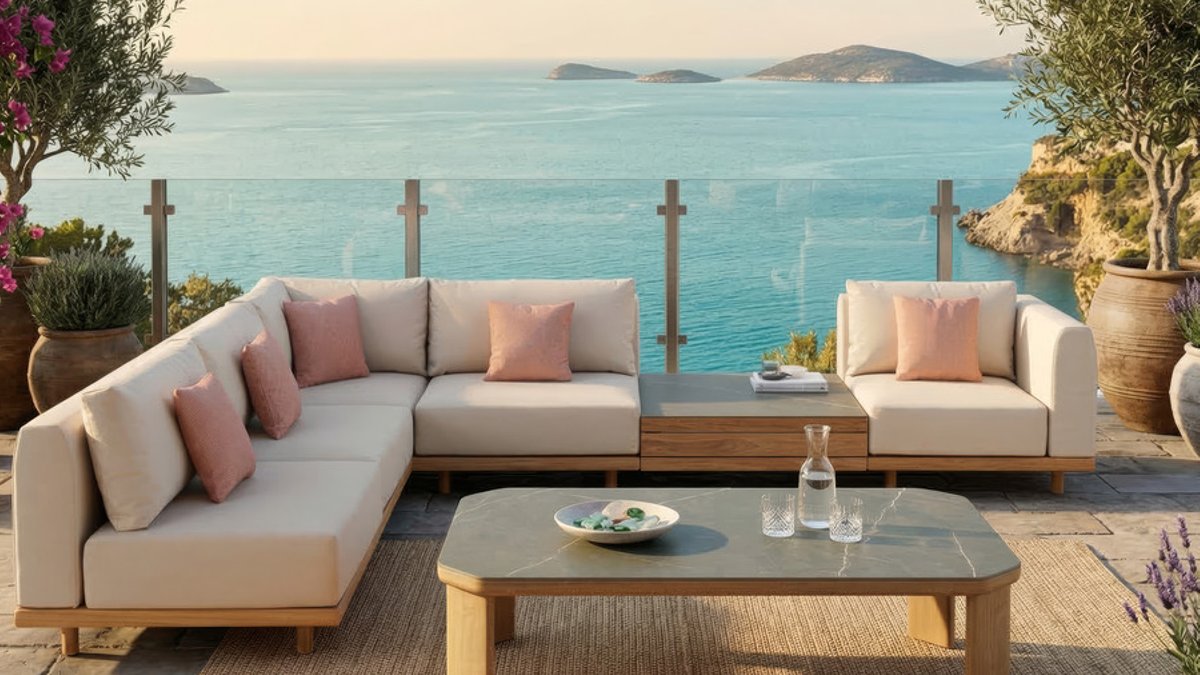
For more than a century, Barlow Tyrie has built outdoor furniture that appears in cafes, hotels, ships, and private gardens across the world. The brand’s reputation for longevity is evident in its continued presence in settings where original pieces remain in use after decades of exposure to salt air, humidity, and intense sunlight. This enduring quality has made the company a preferred choice for architects and designers who prioritize both form and function in outdoor spaces.
Materials built for weather, designed for style
The frames are made from marine-grade stainless steel, powder-coated aluminum, or premium teak. Tabletops come in Italian high-fired ceramic or premium teak. Chairs feature slatted teak seats and backs, with optional cushions or all-weather Textilene® slings. Fabrics are either Sunbrella® (water-repellent) or Sunbrella Rain® (waterproof).
While every piece is engineered for outdoor use, many work just as well indoors. That flexibility lets designers keep the same look from patio to dining room to bar. The seamless transition between spaces is achieved through careful attention to proportions and finishes. For instance, the ceramic tabletops are available in finishes like Marble Rust, making them suitable for interior settings where a cohesive design language is desired. This adaptability has made the brand a favorite among hospitality designers who need to create a unified aesthetic across multiple zones.
The Zen table and Harmony seating set the tone
The Zen dining table is the centerpiece. Its Italian ceramic top—available in a Marble Rust finish—rests on wide, curved teak legs. The table’s three- and four-meter lengths are designed to accommodate large gatherings. The Harmony Stacking Armchair pairs with it. Gentle curves and smooth slats give it clean lines, and optional back and seat cushions add comfort. The same range includes modular deep-seating units like the Harmony Club Chair, which blends mid-century inspiration with a modern silhouette.
Related: Designers prefer C-made for interior projects
To round out the experience, the company offers barbecue and serving units. Powder-coated aluminum, teak, and Italian ceramic combine for durability and style, turning any patio into an outdoor kitchen.
Where the furniture ends up
Most pieces land in commercial spaces—beach clubs, rooftop bars, and boutique hotels—but homeowners are adopting the same designs. In commercial settings, the furniture’s durability is put to the test by high foot traffic, frequent cleaning, and exposure to the elements. Homeowners, meanwhile, are drawn to the same qualities, seeking furniture that can transition from indoor to outdoor use without sacrificing style or comfort.
It’s a quiet shift: outdoor furniture that doesn’t look like it belongs outside. The curves and finishes feel more like indoor pieces, yet they still hold up against rain, salt, and sun. That balance might explain why the company keeps specifying the same designs after a hundred years.
One thing hasn’t changed. The furniture still arrives without instructions for assembly. The assumption is that anyone buying it already knows how it should look.