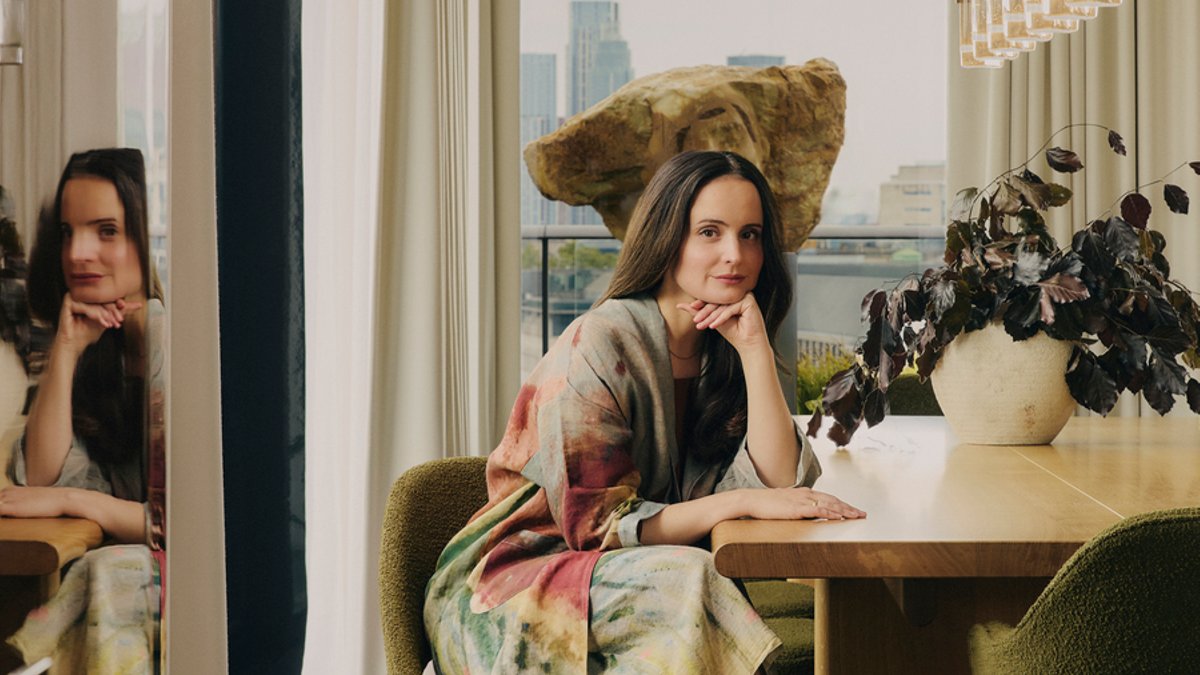
Eloisa Cuturi Kabariti launched her London studio, Cuturi Cameto, in 2022. The practice focuses on high-end residential projects, boutique hospitality, and design-led branded residences. Each commission is treated as contemporary patronage, emphasizing collaboration with artists, makers, and craftspeople.
A multicultural foundation
Kabariti grew up in France to French, Italian, and Uruguayan parents. Her childhood home featured mid-century Italian furniture, while family connections to Jordan and Japan inspired her to collect art and materials globally. These influences define the studio’s aesthetic—warm, earthy tones and authentic materials that feel lived-in.
The team includes designers and architects across Europe. “I’m interested in how different cultures solve the same problem,” she said. “That curiosity prevents the work from becoming repetitive.”
Related: Elevate your travels with smart window design
One early memory involves a pair of Mario Bellini CAB armchairs in her parents’ home. Though valuable, the chairs were used daily, worn thin by children swinging their legs over the arms. “My mum would say, ‘It’s a nice chair, be careful!’ but she accepted the damage,” Kabariti recalled. “That showed me the difference between designing spaces to live in and spaces meant only to be admired.”
From architecture to interiors
Kabariti studied architecture at École Supérieure d’Architecture Paris-Malaquais, specializing in urbanism. She once considered a PhD on how multicultural neighborhoods shape cities but shifted to interior architecture after working in theater design. She describes the change as finding work she truly enjoys.
The studio’s projects often start with space planning, which she compares to solving a puzzle. While she remains hands-on in the design process, she hasn’t ruled out returning to architecture for a house or installation that blends intellectual and social ideas.
Patronage and sustainability
The studio intentionally remains small. This approach extends to hiring, where she values curiosity, reliability, and collaboration over technical skills alone.
She believes sustainability should focus on human engagement, not just materials. The studio’s philosophy reflects this. The team describes itself as approachable and deeply curious about art and craft. Their aim is to create connections between people and the objects around them, making spaces feel meaningful rather than decorative.
Kabariti might have pursued music—she played in bands—or law, specializing in human rights. “I could have lived several lives,” she said. For now, she’s focused on the one she’s built, though a co