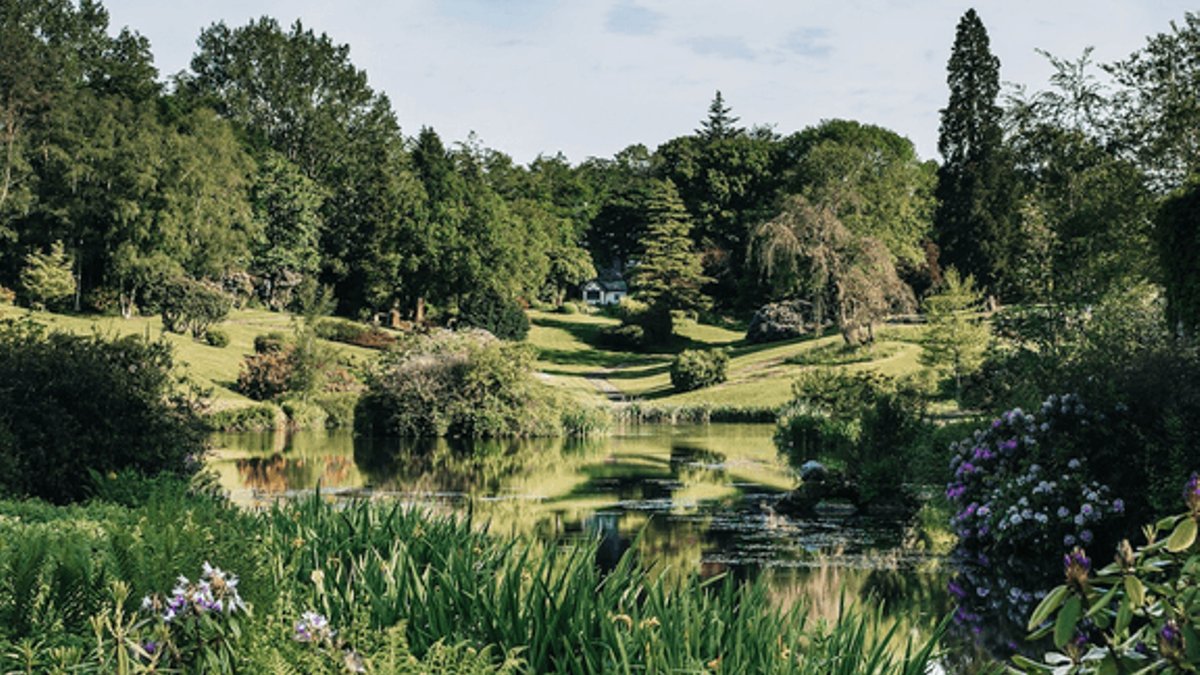
Britain’s best garden staycations offer a mix of scenery, food and hands-on planting ideas, making a weekend in nature feel both restorative and instructional.
Reclaimed industrial environment at The Tawny
Set in the Churnet Valley on the edge of the Peak District, The Tawny occupies former lime-kiln and iron-working grounds. The estate’s history is visible in old mine shafts that border the hotel’s gardens.
Only four gardeners tend roughly 70 acres, so head gardener Danny focuses on hardy perennials near the lodge and lets the outer fields grow wild. After two dry summers, he matched plant selection to soil moisture, planting swamp-tolerant Spanish oak where the ground stays damp.
The herb garden features winding paths rather than formal beds, letting visitors pluck herbs and edible flowers as easily as taking a book from a shelf. A standout dahlia, “Great Silence,” blooms in soft pink-mauve until the first frost, though its tubers must be lifted for winter storage.
For home gardeners, Danny recommends cutting a neat strip around any self-seeded area; the contrast makes the wild section look intentional. Perennial borders and ponytail grasses require only an annual cutback, reducing cost and providing year-round habitat for insects.
Staying options include a shepherd’s hut, treehouse or boathouse, each with an outdoor bath. The old walled garden hosts a heated pool and a sauna, while a new stone steam room is under construction using material from a nearby cave.
Read Also: Scottish Designer Oliver Spendley Turns Rocks Into Furniture
Dinner at The Plumicorn uses herbs harvested that afternoon. Rooms start at £290 per night.
Subtropical escape on Tresco, Isles of Scilly
Located 28 miles off Land’s End, Tresco enjoys a mild climate where winter temperatures hover around nine degrees and frost is rare. The Abbey Garden, created in the 1830s, now spreads across 17 acres of terraces above the sea.
Plants from South Africa, Australia, New Zealand and South America thrive here, including the blue-flowering biennial Echium pinana, once unique to the islands. Head of Estate Alasdair Moore says the garden acts as a “future satellite” for British horticulture.
Storm Goretti damaged the historic shelterbelt in January, prompting a redesign that favors storm-resistant species. “Everything seems so fragile, but also everything feels like you can do something to make things better,” Moore notes, emphasizing multifunctional planting.
Visitors start among the priory ruins, spotting succulents and grey-leafed shrubs that retain moisture. Beyond the walls, carpet-like carpobrotus spill over rocks, offering both colour and erosion control.
Rewilding at Knepp Estate, West Sussex
The 3,500-acre estate has turned former farmland into a mosaic of scrub, wood pasture and open meadow, where longhorn cattle, Tamworth pigs and Exmoor ponies roam freely. In the walled garden, soil was blended with sand, crushed concrete and brick, then formed into varied mounds so each plant finds a niche matching its drainage and fertility needs.
Read Also: Study links kitchen table clutter to gendered guilt
Rather than focusing solely on native species, the planting team includes Mediterranean and South-American selections such as Spanish broom, Greek mountain tea and the silvery Verbascum bombyciferum alongside sea kale. This mix supports a thriving insect community, now recorded at over 430 species, including several that are nationally rare. Visitors can see the goat-pruned yew topiary and self-seeding gravel paths, which illustrate the garden’s experimental ethos.
Gardener Outlook and Island Activities
Visitors can swim with seals in the morning, then explore the islands by kayak or paddleboard. A sea taxi carries guests to Bryher for crab served in butter, while crystal-clear waters surround the coast. Cradle Bay offers a unique dip that nearly vanishes at high tide. Penzance Helicopters reach Tresco in fifteen minutes, and the Scillonian ferry links to St Mary’s in season, with a short boat crossing thereafter. Travelers may also take the Night Riviera sleeper train from Paddington to Penzance, spend a night at Chapel House, and then cross by ferry.
Gulf-Stream garden up north at Inverewe, Wester Ross
The garden sits on a rocky peninsula beside Loch Ewe, where the Gulf Stream allows subtropical plants like tree ferns, Tasmanian snow gums and Himalayan rhododendrons to thrive far north of their typical range. Founder Osgood Mackenzie first planted a shelterbelt of Scots pine in 1862 to protect the site from prevailing winds.
Recent weather events have tested that protection; the 2022 Storm Corrie felled the largest of Mackenzie’s pines, prompting gardeners to grow new trees from the fallen cones. The current strategy emphasizes planting wind-resistant species while maintaining the ornamental value of the existing collection.
The estate’s grounds remain open throughout the year, though the garden and Inverewe House close during winter months. Visitors staying in the family-size apartment at Inverewe House can enjoy views over the loch, while a wildlife boat tour around the peninsula offers sightings of red squirrels, otters, seals and golden eagles, with occasional sea-eagle encounters.
Meals are served at Osgood’s Café, which provides locally sourced fare for day-trippers and overnight guests alike. The nearby village of Poolewe lies on the North Coast 500 route, offering a convenient stop for those exploring the wider region.