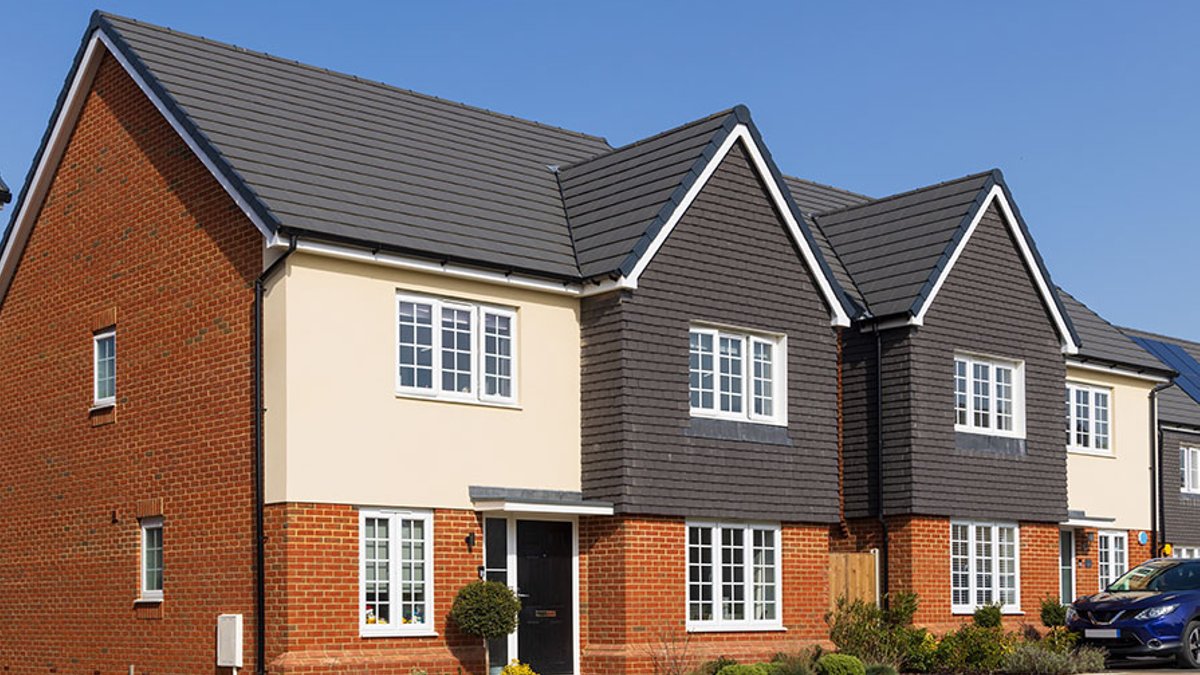
The UK government is planning to build seven new towns, each with at least 10,000 homes, to tackle the country’s housing shortage. This proposal offers a chance to boost housing supply while ensuring these homes are future-proof and don’t need costly retrofitting to meet climate change demands.
The proposed locations have been assessed against 11 Strategic Environmental Assessment (SEA) objectives, covering climate change, air quality, and health. These assessments apply to entire developments and individual homes.
Building Regulations and Climate Challenges
The UK’s net-zero carbon emissions target by 2050 has led to stricter Building Regulations. Approved Document L focuses on reducing operational carbon emissions through three key approaches: improving building fabric thermal efficiency, increasing heating system efficiency, and replacing fossil fuels with renewable technologies like heat pumps and solar PV.
However, heatwaves are becoming more frequent and intense. The English Housing Survey reveals that around three million homes experienced overheating in 2024, and Climate Change Committee research indicates that 15.7 million existing homes fail recognized overheating criteria.
Addressing Overheating and Embodied Carbon
Approved Document O, introduced in 2021, tackles overheating risks in new homes. It encourages passive measures to limit solar gains and maintain comfortable indoor temperatures without relying on mechanical cooling.
While these documents provide a framework for energy-efficient homes, greater alignment could improve year-round performance. Insulation materials made from renewable raw materials, like wood fibre products, offer both winter thermal performance and summer benefits due to their density and heat storage capacity.
Related Post: Early Collaboration Key to High-Performance Building Facades
Embodied carbon, the greenhouse gas emissions associated with building materials, is a significant contributor to a development’s carbon footprint. Although not currently regulated, the government has prioritized improving its measurement and reduction.
The Role of Renewable Materials
Products manufactured from renewable raw materials, such as STEICO’s wood fibre insulation, can help reduce whole-life carbon impacts. These materials store biogenic carbon absorbed during growth, and this stored carbon is retained within finished boards and batts, as documented through Environmental Product Declarations (EPDs).
Wood fibre insulation also supports air quality, health, and wellbeing. Its diffusion-open nature allows moisture vapour to migrate through the building fabric, reducing the risk of interstitial condensation. This, in turn, helps prevent condensation and mould, which can affect occupant health and building durability.
Insulation Material Considerations for Year-Round Performance
Part L’s focus on U-values for winter heat loss does not differentiate between insulation materials that only provide thermal resistance and those with additional summer benefits. While summer heat gain moderation is not currently assessed through a regulatory metric, characteristics like phase shift can be calculated to evaluate how effectively construction elements delay heat transfer.
Wood fibre insulation, available in rigid boards and flexible batts, offers a diffusion-open structure that allows moisture vapour migration, reducing interstitial condensation risks. Its ability to fit closely around structural elements supports insulation continuity, minimizing gaps that cause thermal bypass and cold spots.