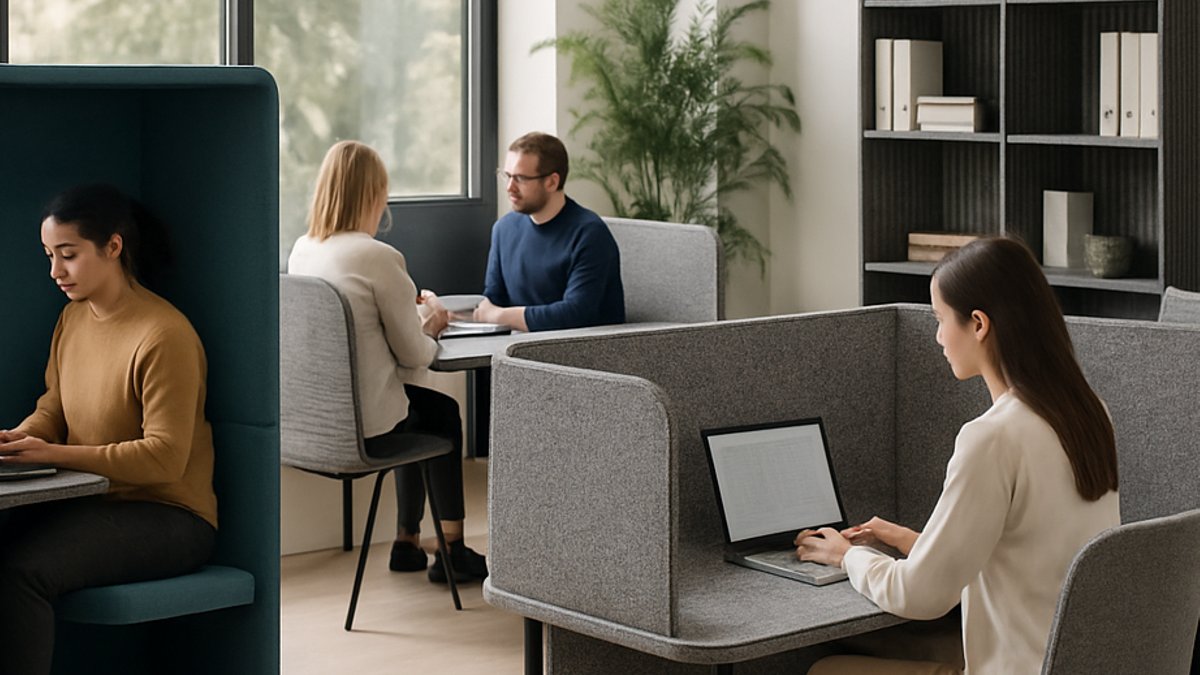
The role of furniture in office environments is evolving dramatically, with a growing focus on sound management. Once, furnishing an office was primarily about aesthetics, with choices based on color, size, and comfort, and little regard for how these pieces influenced sound within the space.
The Challenge of Noise in Office Spaces
Noise control in offices can be quite challenging, especially in open floor plans, which often exacerbate sound issues. These layouts can lead to distractions, reduced productivity, and heightened stress among employees.
In closed conference rooms, the absence of an effective acoustic system can result in echo and sound distortion during video conferences. To combat these issues, it’s essential to integrate thoughtful design elements, including sound-absorbing panels, ceiling tiles, and partitions.
Acoustic Furniture: A Solution for Open-Plan Offices
Acoustic furniture is specifically created to enhance privacy and sound absorption, making it easier for employees to concentrate. Desks, bookshelves, and cabinets are being reimagined with sound in mind, featuring sound-absorbing barriers and materials designed to diminish reverberation and enhance focus.
Bookshelves and cabinets are no longer just for organization; they are increasingly designed to help partition open office spaces, creating distinct areas for focused work and collaborative spaces. Many of these pieces incorporate sound-dampening materials, such as fabric or foam, to further reduce noise levels.
Casework, including cabinets and bookshelves, is designed for flexibility and easy installation, allowing office managers to adapt their layouts as needed. Acoustic casework can effectively serve as barriers that mitigate noise in open-plan settings, with thick panels made of PET-felt or polyester fiber that absorb sound and minimize echoes.
Strategic Placement for Maximum Effectiveness
Acoustic furniture is only effective if placed strategically within an office. Different areas in an office cater to varying work styles, and utilizing acoustic bookshelves or cabinets to delineate these areas can significantly enhance productivity.
Related: Reasons to upholster your furniture
Moveable partitions can also help minimize sound transfer between spaces. Incorporating high-backed chairs or winged seating can provide employees with semi-private workspaces, allowing for personal focus, and reducing distractions from the surrounding open environment.
A growing team is often a positive sign, but it can lead to increased noise levels. Instead of cramming additional desks into a space, it’s more beneficial to maintain reasonable distances between workstations, and consider strategic design solutions, such as designated zones and functional dividers, to manage the overall soundscape effectively.
Companies prioritize sound management.
The blend of aesthetics and acoustics in office furniture reflects a significant shift in workplace design. While collaboration and social interaction are vital, creating environments that also prioritize sound management is essential for employee satisfaction and productivity. They invest in acoustic furniture and thoughtful design placements to evolve their offices into spaces that not only look good but also sound good, thereby enhancing the overall work experience.
As they continue to adapt to changing workplace needs, the importance of sound management will likely continue to grow, and acoustic furniture will play a key role in shaping the modern office environment. Office managers can create spaces that feel larger by using acoustic furniture and strategic placement.
By considering the role of furniture in sound management, office designers can create more effective workspaces. This approach to office design can lead to increased productivity and employee satisfaction.