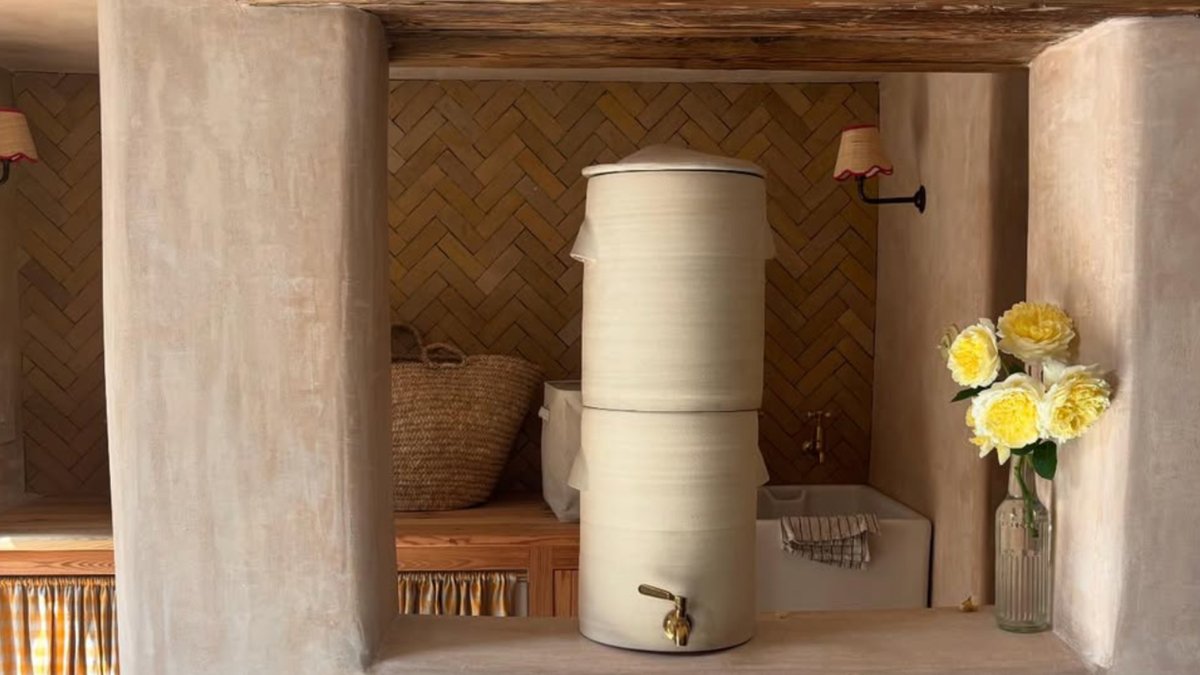
Filtering drinking water has moved from optional to essential for many households, but the standard options have long presented a design problem. The typical choices — a blue plastic pitcher or a bulky stainless steel barrel — tend to clash with kitchens that were carefully styled. A growing number of manufacturers have started addressing this gap, offering countertop systems that combine genuine filtration with materials worth leaving on display.
Standalone countertop systems offer a practical advantage beyond appearance. Unlike small fridge pitchers that need constant refilling, a proper countertop unit becomes a dedicated hydration station. For kitchens with available worktop space, this setup reduces the daily chore of topping up and keeps filtered water accessible at all times.
The design options have expanded considerably. Kitchens with a natural, organic aesthetic can find hand-thrown glazed ceramics, rustic clay pieces, or heritage pottery that sit comfortably alongside other decor. Hand-finished copper adds warmth and an artisanal feel, while high-shine stainless steel systems give surfaces a professional-chef edge. Some users raise their filter on a teak stand to make filling taller glasses easier, clustering ribbed tumblers or ceramic cups nearby on a tray.
Related: 16th-century house restored to former glory
One of the more interesting developments in this space is the shift away from plastic components entirely. Today’s standout pitchers use heavy borosilicate glass and steel, with refillable steel filter hoppers filled with loose-fill carbon granules rather than plastic cartridges. This approach keeps water from sitting in synthetic materials during the filtration process.
For kitchens leaning relaxed and natural, glass vessels with bamboo detailing have become popular. These often use multi-stage mineral beds that strip out heavy metals while raising the water’s pH for a softer taste. The materials do double duty — they look intentional on a counter while addressing water quality concerns.
Then there are the aerating carafes, which work differently from conventional filters. These sit on a porcelain base and spin water into a continuous, vortex-like swirl. They skip traditional filter cartridges altogether, relying instead on oxygenation to soften harsh tap water and lift the taste. The effect is similar to decanting wine right before serving.
Related: Designer blends cultures in bold storytelling
Maintenance for these systems stays manageable. Flushing the housing with warm water every few weeks keeps the water tasting crisp, and cartridge swaps typically land somewhere between three and six months depending on usage. That routine matters — a beautiful filter that isn’t maintained won’t perform any better than the clunky plastic jug it replaced.
The market has clearly moved past the era when function meant sacrificing form. With more manufacturers recognizing that kitchens deserve better than an eyesore, the range of attractive filtration options keeps growing. Whether the preference runs toward glazed ceramics, polished copper, or minimalist glass, there’s now a filter that can hold its own on a well-designed worktop.